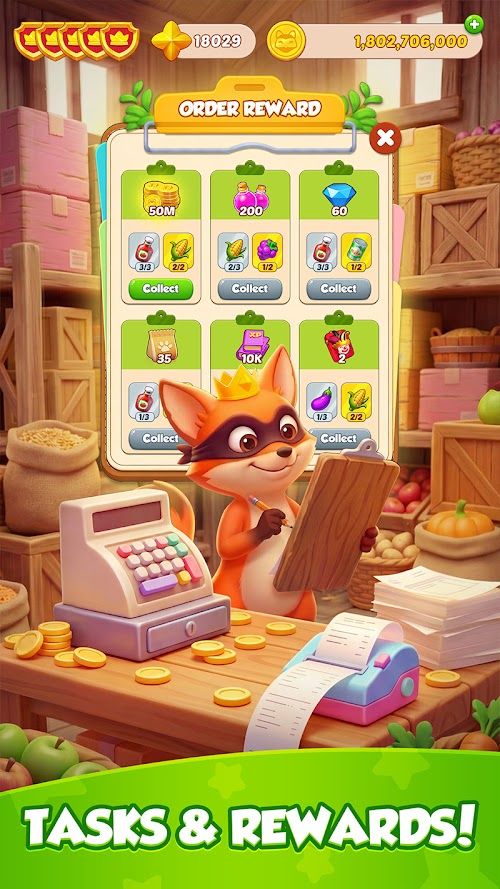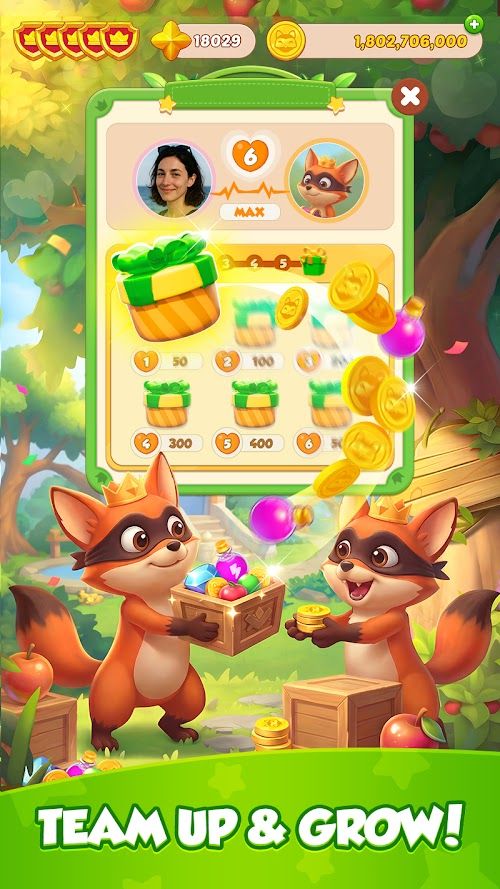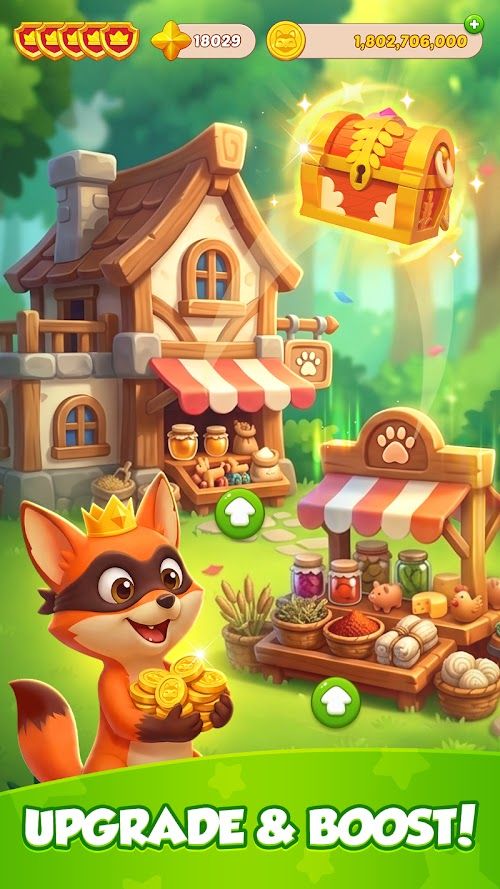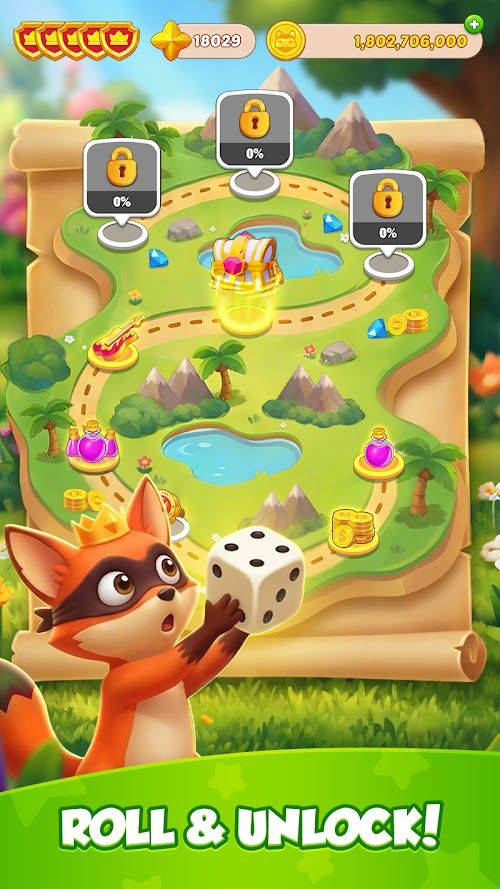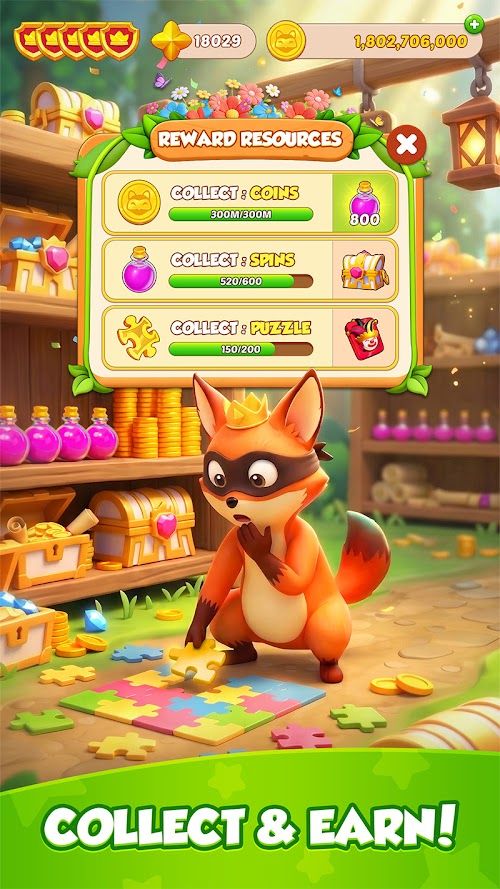



















Crazy Fox by ASTAK TECH markets itself as a slot based casual adventure game where individuals spin about virtual slot machines to win coins, invade and loot other players villages, and grow steadily by building up to 600 themed fantasy villages, such as candy kingdoms and jungle hideouts. Although the game sells itself as an experience of luck based on RNG (Random Number Generator), a closer look at the mechanics of the slot machine and its implementation into the overall gameplay loop, there can be seen both ingeniously designed engagement and controversial algorithmic manipulation which is actually what determines the experience of the player and their level of satisfaction.
The main slot machine features six results Coins, Shield, Attack, Steal, Extra Spin and Pet Bonus. Players spin repeatedly, accumulating resources to construct village buildings—statues, houses, ships, gardens—completing each village five times before progressing to the next themed location. Three bomb symbols trigger Attack mode, allowing players to target and destroy opponents' villages. Three Foxy symbols activate Steal mode, presenting four dig sites where three contain hidden coins and one remains empty. Three shield symbols provide defensive protection against incoming attacks. Three flask symbols award additional free spins, with quantities scaling based on bet amounts.
The primary advantage of Crazy Fox's slot-based design is its accessibility and immediate gratification. Every spin provides immediate feedback--coins are gathered, an attack is used, a shield is gained, and this produces immediate bursts of dopamine that make this game addictive. Giving enough variety, the six outcome system is not too complex to get bored with and is easy enough to be picked up by a casual player. Crazy Fox has a lower barrier to entry as it takes minutes to learn and enjoy the basic mechanics of the game (compared to complex strategy games that demand many hours to learn), and has no requirement to invest time in tutorials.
The integration between slot outcomes and village building creates effective long-term progression hooks. Village construction costs escalate dramatically as players advance through hundreds of themed worlds, requiring exponentially more coins earned through persistent spinning. This graduated difficulty curve naturally extends engagement duration—early villages complete quickly, providing satisfaction, while later villages demand sustained commitment, building sunk-cost psychology that discourages abandonment after significant time investment.
However, severe disadvantages emerge from the RNG implementation itself. Multiple players report that outcome probabilities appear algorithmically manipulated based on bet levels and progression stage. Specifically, once players unlock "super bet" options and wager larger coin amounts, Attack and Steal symbols allegedly appear far less frequently despite supposedly random distribution. This suggests the RNG isn't genuinely random but rather dynamically adjusted to manage player resource accumulation rates, contradicting the fundamental premise of luck-based gameplay.
The shield mechanics exemplify flawed balance design. Players consistently report that when they possess three shields, attacks rarely occur, but the moment shields deplete, multiple opponents immediately target their villages. This pattern suggests either server-synchronized targeting systems deliberately exposing unprotected players or algorithmic manipulation that increases attack frequency when players are vulnerable. Either explanation undermines fair competition principles and creates frustrating experiences where defensive preparation feels meaningless.
The card collection system integrated with the slot machine further compounds RNG manipulation concerns. Players hunt rare cards through gift chests earned from spins, but consistently report extreme difficulty obtaining final cards needed to complete albums—particularly gold rarity cards. One player specifically documented receiving the identical Panda card four out of five times in a 50-chest purchase, statistically improbable under genuine random distribution. This suggests duplicate protection algorithms either don't exist or intentionally maximize frustration to encourage additional purchases or extended engagement.
By Jerry | Copyright © Gameyaya - All Rights Reserved