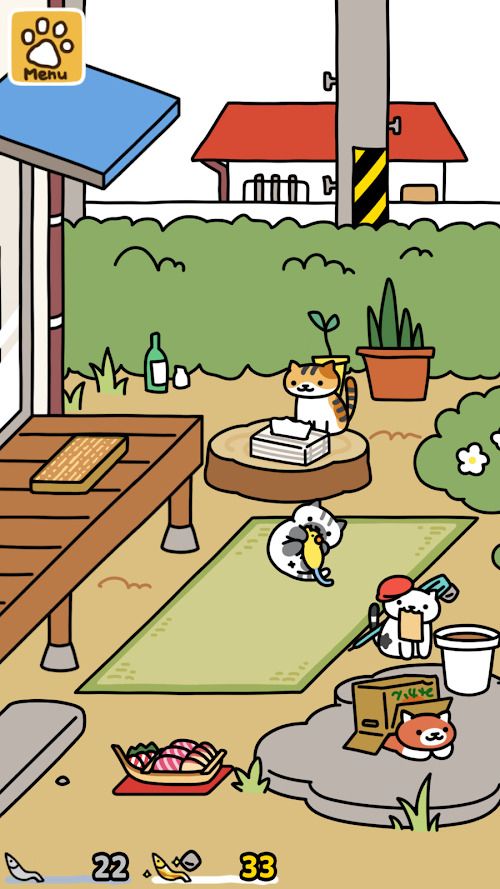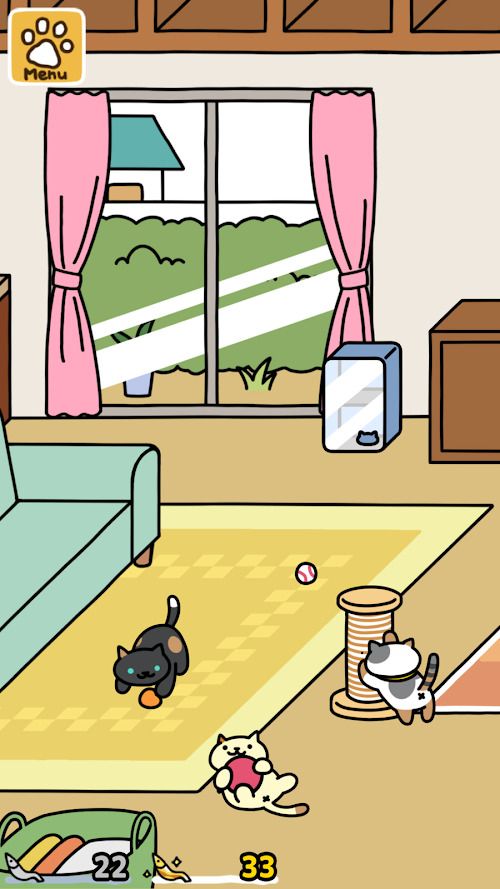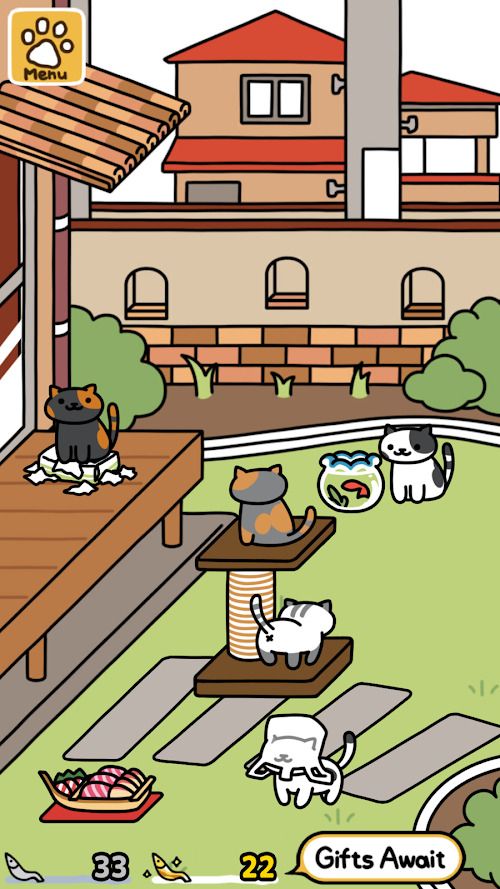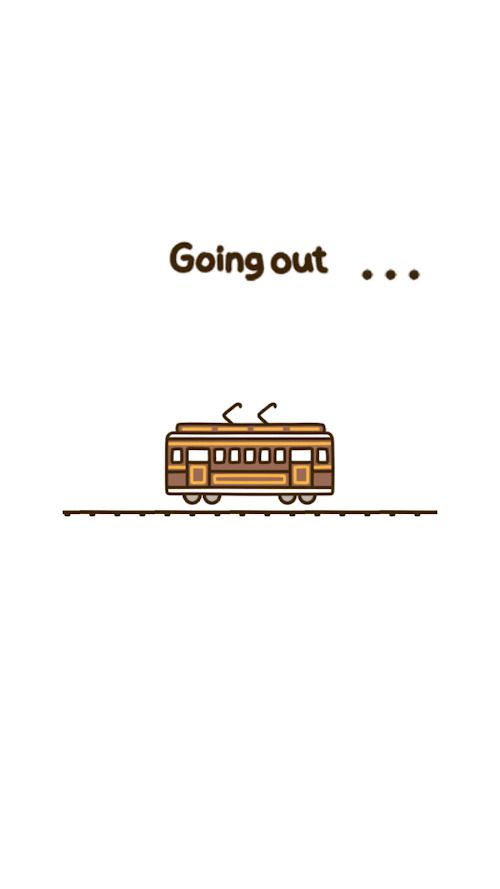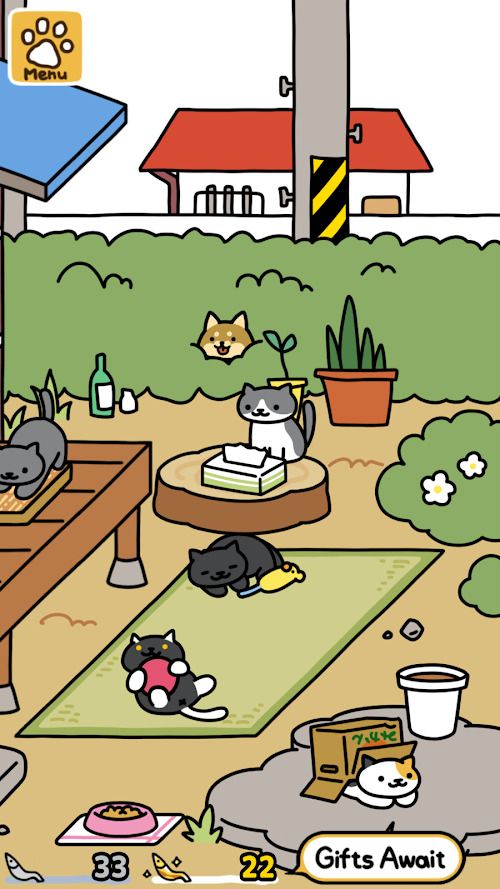





















Neko Atsume 2 by Hit-Point Co., Ltd. essentially reinvents the remote beauty of its predecessor by bringing a strong social component to it that changes the act of cat collecting into a cooperative adventure. Although the main mechanics of the game have not changed, that is, you put goodies and snacks in your yard to attract more than forty different cats, this is where the sequel element of Going Out makes a paradigm shift of this franchise.
First and foremost, the Going Out system allows players to visit other users' yards using tickets, with one free stamp awarded daily for each visit. These stamps accumulate on Stamp Cards requiring sixteen stamps, which can then be exchanged for exclusive items like the Traveler's Hat and Ticket Cushion that cannot be purchased through standard means. This creates a compelling gameplay loop where social interaction becomes essential for completionists seeking every available item. More intriguingly, certain cats such as Informeow, Survy, and Red Purrhood only appear after you've traveled to other players' yards, creating exclusive content gated behind community engagement.
It is apparently to see that the advantages of this social infrastructure are substantial. The system naturally extends gameplay longevity by encouraging daily check-ins beyond simple food refills. Visiting diverse yard configurations provides inspiration for your own designs, particularly valuable given Neko Atsume 2's expanded customization options including purchasable background music and extensive remodeling choices. The exchange code system fosters genuine community building, with players sharing codes across social media platforms to grow their friend networks. This transforms what was essentially a passive experience into an active social hobby.
However, these social features introduce notable disadvantages that may alienate the original game's core audience. Neko Atsume initially succeeded precisely because it required minimal engagement—a meditative respite from demanding games. The stamp collection mechanic now creates obligation rather than relaxation, as players must remember to complete daily visits or lose potential rewards. More than that, the exclusive cats locked behind social features fundamentally alter the game's accessibility; players without reliable internet connections or those uncomfortable sharing codes with strangers cannot complete their Catbook. This represents a philosophical departure from the original's universal accessibility.
Furthermore, the social features expose design limitations. Unlike games built from the ground up for multiplayer interaction, Neko Atsume 2's yard visiting feels superficial—you observe static arrangements without meaningful interaction. The cats you see in others' yards don't match what actually appears on their screens, creating a disconnected experience that diminishes the feature's impact. The stamp trading economy also creates grinding tendencies that conflict with the franchise's casual nature.
The social evolution in Neko Atsume 2 succeeds in creating community and extending engagement but at the cost of the original's serene simplicity. Players seeking collaborative experiences and extended content will appreciate these additions, while purists preferring solitary contemplation may find the social obligations intrusive. Hit-Point has expanded their audience reach but risks fragmenting their existing fanbase with these fundamental gameplay philosophy changes that prioritize active participation over passive enjoyment.
By Jerry | Copyright © Gameyaya - All Rights Reserved